Is It Safe to Start Ppi Again
- Use of PPIs in New Zealand
- When, and how, is information technology advisable to prescribe a proton pump inhibitor?
- When can y'all consider stopping treatment with a PPI?
- How prophylactic are proton pump inhibitors?
- References
In this article
In this article 
View / Download pdf version of this article
Employ of PPIs in New Zealand
The treatment of symptoms caused by gastric acid dates backs to the ancient Greeks, who used coral pulverization (calcium carbonate) to convalesce dyspepsia.one During the 1970s and '80s H2-receptor antagonists, e.one thousand. ranitidine, were introduced. This was followed by the introduction of proton pump inhibitors (PPIs), which were fifty-fifty more effective in reducing gastric acid production. PPIs have now largely superseded H2-receptor antagonists, resulting in an improved quality of life for many patients. Their effectiveness, however, has likewise led to PPIs being used more widely in primary care than almost whatever other medicine.
In 2013, at that place were 428 dispensed prescriptions for omeprazole for every 1000 registered patients, making information technology the 3rd most widely prescribed medicine in New Zealand.2 The number of patients prescribed PPIs in New Zealand has increased steadily over the past v years (Effigy one). In 2013, $4.28 million was spent in the New Zealand wellness sector on omeprazole capsules lone; over i-quarter of this was for omeprazole 40 mg capsules, the highest dose formulation available.three
Which PPIs are available in New Zealand?
In New Zealand there are 3 fully subsidised PPIs available on the Pharmaceutical Schedule: omeprazole, lansoprazole and pantoprazole. These iii medicines are also available for purchase in limited quantities, without prescription, as a "Pharmacy but" medicine. Rabeprazole is available unsubsidised, with a prescription. Patients should be asked most any use of not-prescription medicines before acid suppressive medicines are prescribed.
 Refer to the New Zealand Formulary for further details on these medicines: www.nzf.org.nz
Omeprazole, lansoprazole and pantoprazole are indicated for:4
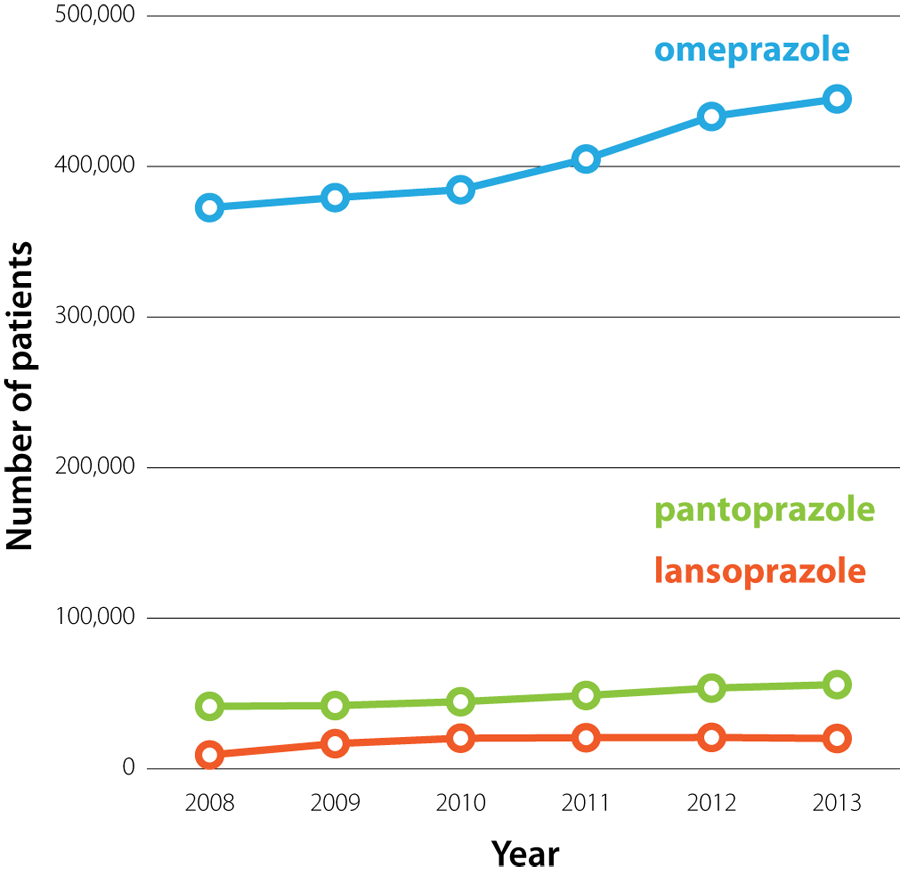 |
| Figure i: The number of patients who were dispensed omeprazole, pantoprazole or lansoprazole from a community chemist's shop in New Zealand (2008 – 2013).3 |
- Treatment of gastro-oesophageal reflux disease (GORD), including Barrett's oesophagus
- Prevention of NSAID-associated duodenal or gastric ulcers (omeprazole and pantoprazole only)
- Treatment of benign duodenal and gastric ulcers
- Eradication of Helicobacter pylori (as part of a combination regimen with antibiotics)
- Handling of Zollinger-Ellison syndrome (omeprazole and pantoprazole merely)
The PPIs available in New Zealand take a similar efficacy when given at recommended doses; e.yard. a meta-analysis constitute there was no deviation in the comparative effectiveness of PPIs in healing oesophagitis.five The availability of 3 subsidised PPIs means that if a patient experiences agin effects with one PPI, another can exist trialled. It also allows for choices in formulation, e.thousand. pantoprazole is available in modest tablets that may be preferable for patients who have difficulty swallowing.
When, and how, is it advisable to prescribe a proton pump inhibitor?
When initiating PPI treatment information technology is helpful to discuss with patients what the expected elapsing of treatment is likely to be. This reinforces the bulletin that treatment will not continue indefinitely, unless the indication remains, and is likely to make later discussions about dose adjustment and treatment withdrawal easier.
For most patients an advisable starting regimen is omeprazole twenty mg, once daily (depending on the indication).4 In some patients, treatment may demand to be increased to forty mg, daily, if symptoms are not able to be controlled, but starting treatment initially with omeprazole twoscore mg, in one case daily, is rarely indicated in a primary care setting. Over time, and over again depending on the indication for handling, the dose of PPI may be able to be reduced, e.one thousand. from twenty mg to 10 mg omeprazole, daily, or changed to "equally needed" dosing, if acceptable control of symptoms is achieved.
N.B. Before prescribing a PPI it is of import to consider a patient'southward take chances factors for gastric cancer, as PPI use tin can mask the symptoms of this malignancy. The incidence of gastric cancer increases essentially later on age 55 years, and a decade earlier in people of Māori, Pacific or Asian descent.7
The pharmacology of proton pump inhibitors
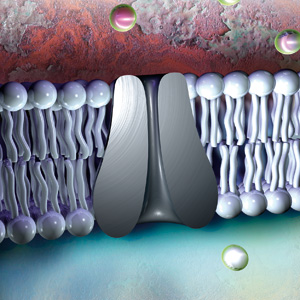
PPIs are prodrugs, i.east. they are inactive when administered and undergo conversion to an active form in vivo.6 PPIs are acid labile and are therefore formulated with an enteric blanket to protect them from degradation in the acidic environment of the stomach. Once they take passed through the stomach and the enteric coating has dissolved in the small intestine, PPIs are absorbed into the blood where they have a relatively short plasma half-life of 1 – 1.5 hours.1 The upshot of PPIs extends well across this half-life, because the active metabolite binds irreversibly to the H+/K+-ATPase proton pump of parietal cells. This prevents the send of acidic hydrogen ions into the gut lumen for 10 – 14 hours.6 The acrid-suppressing effect of PPIs takes at least five days to achieve a maximal effect.i All the same, this effect is not absolute; even at high doses approximately one-quarter of proton pumps in each parietal cell will remain agile.6
Gastrin is the hormone that stimulates parietal cells to release gastric acrid. When PPI inhibition of gastric acrid production occurs, gastrin release is increased to recoup for the decreased acerbity of the stomach. Recently, several studies have suggested that when PPIs are withdrawn the body will keep to produce gastrin at above pre-treatment levels, causing an effect referred to as rebound acid secretion.6
Gastro-oesophageal reflux disease
Proton pump inhibitors are indicated in the treatment of suspected or confirmed GORD. The treatment regimen depends on the severity of symptoms and the likelihood of the patient developing complications. PPIs tin be used to:i, 8
- Establish a diagnosis of GORD via empiric treatment over several weeks
- Provide "every bit needed" relief of symptoms in patients with milder forms of GORD
- Provide daily symptom relief for patients with more astringent symptoms
When managing patients with balmy GORD, it is important that the patient and clinician both agree that the regimen volition be regularly reviewed, with the goal of treatment beingness lifestyle control of symptoms with minimal reliance on medicines. The lowest effective dose of PPI should be used for the shortest possible time.
For further information, see: "Update on the management of gastro-oesophageal reflux disease".
Non-steroidal anti-inflammatory drug (NSAID)-associated ulcers
PPIs are indicated for the prevention and treatment of NSAID-induced erosions and ulcers in at risk patients (see beneath), and are often prescribed to treat NSAID-induced dyspepsia.iv PPIs should be taken daily, rather than "as needed", to forestall NSAID-related agin furnishings because ulceration or bleeding of the gastrointestinal tract can occur in the absence of dyspepsia.ix
Risk factors for gastrointestinal adverse effects, e.g. perforations, ulcers and bleeding, associated with NSAID use include:9, 10
- Age over 65 years
- Previous adverse reaction to NSAIDs
- The apply of other medicines that may exacerbate any gastrointestinal adverse effects, e.yard. anticoagulants, antiplatelets and corticosteroids
- A history of cardiovascular disease
- Liver disease
- Chronic kidney disease
- Smoking
- Excessive alcohol consumption
Many of these risk factors are likewise contraindications to the utilise of NSAIDs.
A PPI is advisable for patients with any of the above chance factors, who are taking NSAIDs long-term. Patients should be advised to report any gastrointestinal symptoms (e.chiliad. heartburn, black stools) which may indicate that an erosion or ulcer has occurred.9 Also consider checking the patient's haemoglobin level after i month of NSAID treatment.9
For ulcer prevention, the recommended regimen is omeprazole twenty mg, in one case daily, for the duration of NSAID treatment.4 To treat NSAID-associated duodenal or gastric ulcers the recommended regimen is omeprazole twenty mg, once daily, for four weeks, which may exist continued for a farther four weeks if required.4 Pantoprazole is an alternative in both regimens if omeprazole is not tolerated.iv Lansoprazole is not indicated for ulcer prevention in patients taking NSAIDs, but can exist used for treatment of ulcers.four
For further information see: "Not-steroidal anti-inflammatory drugs (NSAIDs): Making safer handling choices", BPJ 55 (Oct, 2013).
Eradication treatment for H. pylori
Proton pump inhibitors are recommended for the eradication of H. pylori as part of a triple treatment regimen. For example, a seven day grade of:4
- Omeprazole 20 mg, twice daily; and
- Clarithromycin 500 mg, twice daily; and
- Amoxicillin 1 g, twice daily (or metronidazole 400 mg, twice daily, if allergic to penicillin)
Other regimens using dissimilar dosing intervals or other PPIs, due east.g. lansoprazole, tin also exist used (see NZF for further data).
Confirmation of eradication of H. pylori after a triple treatment regimen is not required for the majority of patients. A exam of cure may be considered in patients with a recurrence of symptoms, a peptic ulcer complication or those with important co-morbidities.11
For further information, see: "The irresolute face of Helicobacter pylori testing", BT (May, 2014).
When tin you consider stopping treatment with a PPI?
Many patients taking PPIs require long-term treatment and withdrawal of the PPI will be inappropriate, due east.g. patients with Barrett'due south oesophagus. In other patients, e.m. with a history of astringent erosive oesophagitis, withdrawal of PPIs should but be considered after give-and-take with an appropriate specialist. Nonetheless, in each practice population there will be some patients for whom it is appropriate to reduce the dose of the PPI they are prescribed, due east.g. from xx mg omeprazole, in one case daily, to 10 mg omeprazole, one time daily, or switching to "as needed" dosing. For patients taking PPIs long-term the demand for ongoing handling should be reassessed at every consultation.
The patient's expectations when the PPI was first prescribed will play a big part in their credence of the proposition to reduce their PPI exposure. There is no articulate evidence every bit to what the all-time regimen for withdrawing PPI treatment is, but in general, downward dose titration should be considered when symptoms are under control.6 For instance, a patient is prescribed 20 mg omeprazole, daily, for iv to six weeks to manage symptoms of GORD. The patient responds to treatment and their symptoms resolve. The dose is so reduced to 10 mg, daily, for two weeks, and and so handling is stopped. The patient is given a prescription for 20 mg omeprazole to utilize "every bit needed" if symptoms render.
Advise patients near the possibility of rebound acid secretion
Rebound acrid secretion tin occur when PPIs are withdrawn; i study constitute that more than than 40% of asymptomatic patients experienced dyspepsia one calendar week afterward completing a four week treatment class of pantoprazole.12 Serum markers suggest that acrid secretion one week following cessation of PPI treatment can be significantly increased higher up pre-treatment levels. This should render to normal within 2 weeks.12
The symptoms caused past rebound acid secretion, e.g. gastro-oesophageal reflux, are the same every bit those that would be an indication for PPI treatment, therefore a reinforcing loop can exist formed where initial handling creates the need for further handling. The possibility of rebound acrid secretion should exist discussed with patients so they can exist prepared for this when withdrawing from PPI treatment.
Medicines that contain both an antacid and an anti-foaming agent, e.thou. Mylanta P oral liquid, Acidex oral liquid, Gaviscon Double Force tablets are likely to be the most effective treatment for rebound acid secretion. Aluminium hydroxide tablets can too exist constructive. Whatsoever of these products can exist prescribed as "rescue" medication and provide reassurance to patients if symptoms return.
For further information run into: "Managing gastro-oesophageal reflux disease (GORD): an update".
How condom are proton pump inhibitors?
The rate of adverse furnishings associated with PPI treatment is relatively low. However, given that each practise is likely to have many patients taking PPIs, clinicians need to be enlightened of the potential risks. These risks should be discussed with patients, and the need for periodic monitoring considered in those at increased risk.
All three subsidised PPIs bachelor in New Zealand can crusade headache and gastrointestinal agin effects, due east.g. nausea, vomiting intestinal pain, flatulence, diarrhoea or constipation.4 The gastrointestinal adverse furnishings of PPIs can be mistaken for symptoms of GORD, sometimes resulting in increased doses of PPI being prescribed. Less frequently, PPI use is associated with dry mouth, peripheral oedema, dizziness, sleep disturbances, fatigue, paraesthesia, arthalgia, myalgia, rash, pruritus and interstitial nephritis.4
PPIs are not known to be associated with an increased take chances of foetal malformations in humans (Pregnancy Take chances Category B3).4 PPIs are therefore considered safety to use during pregnancy, still, other medicines should exist used where possible. A reasonable arroyo for pregnant women who crave acid suppressive medication is to trial antacids (east.m. calcium carbonate, alginate formulations) or ranitidine (Pregnancy Risk Category B1) first and if these medicines are not effective, consider prescribing a PPI.
Higher doses of PPIs should be avoided in patients with moderate to severe liver disease because decreased metabolism may cause the medicine to accumulate (see NZF for details).4
The risk of infection is increased
Gastric acid suppression with PPIs increases the risk of infection with gastrointestinal or respiratory pathogens, although the absolute take a chance to about patients remains low. The higher adventure is thought to be due to a reduction in the effectiveness of the "acid wall" tummy barrier. This allows viable pathogens to travel upwardly or downwards the gastrointestinal tract and besides colonise the lower airways.
Where possible, consider delaying the initiation of PPIs in patients with an increased run a risk of infection, eastward.grand. an older patient with a family member who has influenza, patients who are taking antibiotics or travelling to countries where at that place is a high risk of enteric infection.6 Information technology is non known if at that place is any benefit to temporarily stopping treatment in patients who are already taking PPIs, during periods when they are at an increased chance of infection.
In a meta-analysis of 12 studies involving nigh iii 000 patients, it was establish that acid-suppressing treatment increased the risk of C. difficile infection. This risk was increased 1.vii times with once-daily PPI employ and ii.4 times with more than once daily use.thirteen Half dozen studies establish a greater than three-fold increased risk of Salmonella, Campylobacter and Shigella infection in patients taking PPIs.13
In some other report of over 360 000 people, it was found that PPI use was associated with an increased risk of pneumonia, and the risk increased with increasing dose of PPI.14 The incidence rate of pneumonia in people taking a PPI was two.45 per 100 person-years, compared to 0.6 per 100 person-years in people not taking a PPI.14 Another written report institute that the likelihood of patients developing pneumonia was increased five-fold during the get-go week of PPI handling, but decreased after this, falling to 1.iii-fold increased risk after patients had been treated for three months or more than.15 This effect may be explained by patients presenting with the early on symptoms of pneumonia being prescribed a PPI.vi
Malabsorption of nutrients may occur
Acrid in the gut increases the solubility of elements, due east.g. calcium and iron, from insoluble salts and makes protein-bound vitamins, e.g. vitamin B12, available for assimilation. It has therefore been suggested that gastric acid suppression may subtract absorption of some nutrients and pb to an increased prevalence of atmospheric condition related to malabsorption. All the same, this clan is controversial. In most cases, patients tin be reassured that a balanced diet, including essential elements and minerals (e.g. calcium, iron, folate, magnesium) is adequate to address this risk.
Long-term PPI utilise has been associated with a small increase in fracture adventure. Still, the New Zealand Medicines Adverse Reactions Commission (MARC) noted that the association between PPI utilise and fracture adventure in the majority of studies was small and does non warrant any regulatory action at this time.16 A written report of more than 15 000 instances of osteoporosis-related fractures found that after five years of PPI utilize patients had an increased adventure of hip fracture (adapted odds ratio = 1.62), and the risk increased further when handling was continued for 7 years (adjusted odds ratio = 4.55).17 Patients taking PPIs for more than 7 years as well had an increased chance of non-hip fractures (adjusted odds ratio = 1.92).17
An increased adventure of osteoporosis should be considered in mail-menopausal females who are taking PPIs long-term, especially if they have other risk factors, east.1000. a family history of osteoporosis or long-term corticosteroid use. Stepping downward PPI treatment to the lowest effective dose, or prescribing "equally needed" treatment, if appropriate, may reduce this risk.
Severe hypomagnesaemia has been associated with the utilise of PPIs, in a express number of patients, which resolved when PPI treatment was withdrawn.18 In 2012, Medsafe advised that hypomagnesaemia, and perchance hypocalcaemia, were rare adverse effects of PPI utilize. Omeprazole, twenty – 40 mg per mean solar day, was the dosage most frequently associated with these deficiencies.19 Magnesium is known to affect calcium homeostasis past deceasing parathyroid hormone secretion and decreasing the response of the kidney and the skeleton to parathyroid hormone.nineteen
Patients with a history of excessive alcohol apply, who are taking a PPI, accept an increased take a chance of developing hypomagnesaemia due to the additive effects of chronic ethanol exposure on metabolic function. The employ of diuretics, ciclosporin or aminoglycosides with PPIs increases the risk of hypomagnesaemia occurring. Symptoms of hypomagnesaemia are non-specific and may include musculus cramps, weakness, irritability or confusion.
Routine testing of magnesium levels in patients taking PPIs is generally not recommended. Nonetheless, if a patient has been taking a PPI long-term and they present with unexplained symptoms that are consistent with hypomagnesaemia, consider requesting a serum magnesium level. Increased dietary intake of magnesium rich foods, east.k. nuts, spinach or wheat, or magnesium supplementation may be sufficient to improve serum magnesium levels while continuing the PPI. For some patients the PPI will demand to be stopped; if the indication for using the PPI is stiff, a re-challenge while monitoring magnesium can be undertaken.
For further information encounter: "Hypomagnesaemia with proton pump inhibitors" BPJ 52 (Apr, 2013).
Vitamin B12 deficiency has been associated with the use of PPIs in older patients.18 Several short-term studies have shown that PPIs decreased the absorption of vitamin B12 from nutrient.18 In older patients with poor nutrition, who are taking PPIs long-term, consider testing vitamin B12 levels periodically.eighteen
Hyponatraemia has been associated with the utilise of PPIs in a very small number of patients.20 Hyponatraemia, however, is a relatively common occurrence in older people, many of whom are probable to exist taking PPIs.
Acute interstitial nephritis has been associated with PPIs
Prior to June 2011, the Eye for Adverse Reactions Monitoring (CARM) had received 65 notifications of interstitial nephritis linked to PPI utilise.21 Interstitial nephritis can upshot in permanent kidney harm.6 Symptoms and signs suggestive of interstitial nephritis include: fever, rash, eosinophilia, malaise, myalgia, arthralgia, weight loss, contradistinct urine output, haematuria or pyuria and/or high claret pressure.21 NSAIDs are well known for their nephrotoxic potential and their use should increase suspicion of interstitial nephritis in patients with these symptoms. Other gamble factors that would increase the suspicion of interstitial nephritis include the use of β-lactams, e.g. penicillins or cephalosporins, sulphonamides and diuretics, or the presence of infection or immune and neoplastic disorders.21 If interstitial nephritis is suspected, request urine microscopy and renal function tests. The patient should exist referred to a Nephrologist for assessment. To confirm a diagnosis of interstitial nephritis a renal biopsy is required.
Interactions with other medicines
Concerns of a possible interaction betwixt omeprazole and clopidogrel are unlikely to be clinically significant. MARC assessed the bear witness of an interaction betwixt PPIs and clopidogrel and concluded that while there was evidence that PPIs may affect clopidogrel activeness ex vivo, the available evidence suggested that this would not translate to clinically pregnant agin outcomes.22 At that place is no need to switch handling for patients who are already taking a PPI and clopidogrel. Still, if considering prescribing a PPI at the same time as clopidogrel and then pantoprazole is the recommended choice. Pantoprazole is known to have less of an inhibitory outcome on the CYP2C19 enzyme compared with omeprazole or lansoprazole.23
PPIs can cause a minor increase in the anticoagulant upshot of warfarin or a subtract when the PPI is stopped. Patients taking warfarin should have their INR measured more often post-obit the initiation, or discontinuation of PPIs to ensure they exercise not experience a clinically significant interaction.viii
"Take-home" points about PPIs
- Review all existing patients taking PPIs long-term and assess whether the indication for handling remains and whether the dose of PPI can exist reduced
- When new patients are started on PPIs, talk over the expected duration of treatment and have a plan for stepping down or stopping treatment
- In most situations, patients do not need to be started on PPI treatment in main care with 40 mg omeprazole, daily (or equivalent)
- In that location are few patients who should be taking 40 mg, omeprazole, daily long-term
- Consider whether "as needed" apply would exist more advisable for patients than taking PPIs daily
- Ensure patients are prepared for rebound acid secretion which may occur when PPI treatment is withdrawn; antacids can be used as a "rescue medicine"
Acknowledgement
Cheers to Dr Jason Hill, Gastroenterology Clinical Leader, Southern DHB for skillful review of this article.
References
- Dutta U, Moayyedi P. Direction of reflux-related symptoms. All-time Pract Res Clin Gastroenterol 2013;27:387–400.
- bpacnz. 2013 Annual Practice Report - Pharmaceutical and Laboratory Test Utilisation. 2013. Available from: www.bpac.org.nz/Report/2013/Nov/annRep.aspx (Accessed Jun, 2014).
- Ministry of Wellness (MoH). Pharmaceutical collection. 2014.
- New Zealand Formulary (NZF). NZF v23. 2014. Available from: www.nzf.org.nz (Accessed Jun, 2014).
- Wang W-H, Huang J-Q, Zheng G-F, et al. Caput-to-head comparison of H2-receptor antagonists and proton pump inhibitors in the treatment of erosive esophagitis: a meta-analysis. Globe J Gastroenterol 2005;11:4067–77.
- Yang Y-X, Metz DC. Safety of proton pump inhibitor exposure. Gastroenterology 2010;139:1115–27.
- New Zealand Guidelines Grouping. Suspected cancer in primary care: guidelines for investigation, referral and reducing disparities. NZGG, 2009. Available from: world wide web.health.govt.nz (Accessed Jun, 2014).
- Gastroenterological Society of Commonwealth of australia (GESA). Reflux affliction: Gastro-oesophageal reflux disease in adults. Victoria: GESA 2011. Available from: world wide web.gesa.org.au/files/editor_upload/File/Professional/Reflux_Disease.pdf (Accessed Jun, 2014).
- 24-hour interval RO, Graham GG. Non-steroidal anti-inflammatory drugs (NSAIDs). BMJ 2013;346:f3195.
- Hawkey CJ, Langman MJS. Not-steroidal anti-inflammatory drugs: overall risks and management. Complementary roles for COX-ii inhibitors and proton pump inhibitors. Gut 2003;52:600–eight.
- New Zealand Guideline Group. Management of dyspepsia and heartburn. Prove-based best practice guideline summary. NZGG, 2004. Bachelor from: www.wellness.govt.nz (Accessed Jun, 2014).
- Niklasson A, Lindström Fifty, Simrén Thousand, et al. Dyspeptic symptom development after discontinuation of a proton pump inhibitor: a double-blind placebo-controlled trial. Am J Gastroenterol 2010;105:1531–7.
- Leonard J, Marshall JK, Moayyedi P. Systematic review of the gamble of enteric infection in patients taking acrid suppression. Am J Gastroenterol 2007;102:2047–56.
- Laheij RJF, Sturkenboom MCJM, Hassing R-J, et al. Chance of customs-caused pneumonia and use of gastric acid-suppressive drugs. JAMA J 2004;292:1955–60.
- Gulmez SE, Holm A, Frederiksen H, et al. Use of proton pump inhibitors and the risk of community-caused pneumonia: a population-based case-control study. Curvation Intern Med 2007;167:950–5.
- Minutes of the 143rd Medicines Adverse Reactions Committee meeting: Adventure of osteoporosis and fractures associated with proton pump inhibitor treatment. Medsafe, 2013. Available from: www.medsafe.govt.nz/profs/adverse/Minutes143.htm#iii.4 (Accessed Jun, 2014).
- Targownik LE, Lix LM, Metge CJ, et al. Use of proton pump inhibitors and risk of osteoporosis-related fractures. CMAJ 2008;179:319–26.
- Ito T, Jensen RT. Association of long-term proton pump inhibitor therapy with bone fractures and effects on absorption of calcium, vitamin B12, iron, and magnesium. Curr Gastroenterol Rep 2010;12:448–57.
- Medsafe. Omeprazole and risk of hypomagnesaemia. Prescriber Update, 2013. Available from: world wide web.medsafe.govt.nz/profs/PUArticles/OmeprazoleJune2010.htm (Accessed Jun, 2014).
- Liamis Yard, Milionis H, Elisaf M. A review of drug-induced hyponatremia. Am J Kidney Dis Off J Natl Kidney Plant 2008;52:144–53.
- Medsafe. Proton pump inhibitors and interstitial nephritis. Prescriber Update, 2013. Available from: world wide web.medsafe.govt.nz/profs/puarticles/protonpumpsept2011.htm (Accessed Jun, 2014).
- Medsafe. Update: PPIs and Clopidogrel Interaction. Prescriber Update, 2014. Available from: www.medsafe.govt.nz/profs/PUArticles/March2014UpdatePPIsAndClopidogrel.htm (Accessed Jun 2014).
- Drepper Dr., Spahr Fifty, Frossard JL. Clopidogrel and proton pump inhibitors-where exercise we stand in 2012? Globe J Gastroenterol 2012;18:2161–71.
Source: https://bpac.org.nz/bpj/2014/june/ppi.aspx

Post a Comment for "Is It Safe to Start Ppi Again"